
How to Finance a New Medical Equipment Purchase Without Disrupting Your Cash Flow
- August 21, 2026
- Posted by: BLS
- Category: Medical Loan
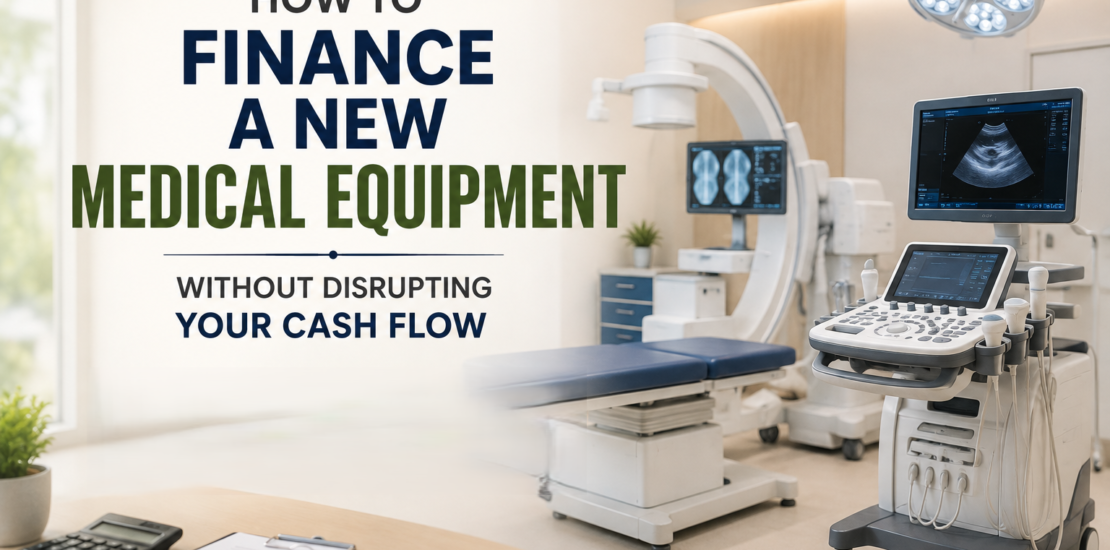
Medical equipment plays an important role in modern healthcare. From diagnostic machines and dental equipment to patient monitoring systems and specialised treatment devices, the right equipment can help healthcare professionals improve their services and manage their daily operations more effectively.
However, purchasing new medical equipment can require a significant investment. For a clinic, diagnostic centre, dental practice, hospital, or other healthcare facility, spending a large amount of available cash on equipment can reduce the funds available for salaries, rent, supplies, maintenance, and other operating expenses.
This is where Medical Equipment Financing can become a useful option for eligible healthcare businesses and professionals.
Instead of paying the complete equipment cost from available cash, suitable financing may allow the borrower to spread the cost over an agreed repayment period. This can help preserve working capital while allowing the healthcare facility to invest in equipment it needs.
Why Medical Equipment Can Be a Major Investment
Medical equipment can vary significantly in price depending on its type, features, technology, brand, and intended use.
A small clinic may need basic diagnostic or patient care equipment, while a larger healthcare facility may require advanced imaging systems, laboratory equipment, surgical equipment, or specialised treatment machines.
Apart from the purchase price, there may also be costs related to installation, transportation, training, maintenance, software, upgrades, and accessories.
For this reason, healthcare professionals should calculate the complete investment before deciding how to finance a purchase. Learn More: Loan Against Fixed Deposit: How It Works and When It Can Be Useful
How Medical Equipment Financing Can Help
Medical Equipment Financing can potentially help eligible borrowers purchase essential equipment without using all their available working capital at once.
Instead of making one large payment, financing allows the cost to be managed through scheduled repayments according to the applicable terms.
This can be particularly useful when the equipment is expected to generate additional revenue, improve operational efficiency, expand treatment capacity, or reduce the need to outsource certain services.
However, financing should always be based on realistic business requirements and repayment capacity.
What Medical Equipment Can Be Financed?
The equipment eligible for financing depends on the lender and applicable financing terms.
Depending on the healthcare facility, financing may be considered for equipment such as diagnostic machines, dental equipment, laboratory equipment, patient monitoring systems, imaging equipment, treatment equipment, medical furniture, and other specialised devices.
Before applying, check whether the equipment you intend to purchase qualifies under the financing option.
Consider the Purpose of the Equipment
Before purchasing expensive equipment, clearly identify why you need it.
Ask yourself whether the equipment will
- Increase the number of patients you can serve
- Allow you to introduce a new treatment
- Improve diagnostic capabilities
- Reduce operational delays
- Improve patient experience
- Reduce dependence on external service providers
- Replace outdated equipment
- Improve overall efficiency
A clear purpose can help you determine whether the investment is likely to provide sufficient value for your healthcare practice. Read More: Education Loan vs Personal Loan for Higher Studies: Which Is Better?
Calculate the Complete Equipment Cost
The purchase price is only one part of the total investment.
You may also need to account for
- Installation
- Transportation
- Maintenance
- Training
- Software
- Accessories
- Insurance
- Repairs
- Annual service requirements
Adding these costs to your budget can give you a more realistic understanding of how much funding you actually require.
This can also help prevent unexpected financial pressure after the equipment has been purchased.
Avoid Using All Your Working Capital
Healthcare businesses need cash for regular operations.
Even after purchasing new equipment, you may have to pay salaries, rent, utilities, medical supplies, maintenance expenses, software subscriptions, taxes, and other operational costs.
Using a large portion of your available cash for equipment could leave your practice with limited funds for these requirements.
Suitable financing may help you maintain a healthier balance between investment and working capital. Read More: Agriculture Equipment Loan
Estimate the Equipment’s Potential Return
Before taking financing, consider how the equipment could contribute to your practice.
For example, a new diagnostic machine may allow you to offer services that were previously unavailable. Additional treatment equipment could increase your capacity to serve patients.
However, avoid assuming that every equipment purchase will immediately generate additional revenue.
Estimate potential demand, expected usage, pricing, maintenance expenses, and other relevant factors before making your decision.
Consider New Technology Carefully
Healthcare technology continues to evolve.
New equipment may offer improved features, greater efficiency, better accuracy, or additional capabilities. However, newer technology can also come with a higher price.
Before purchasing, compare the features you actually need with the additional cost.
Buying equipment with features that your practice rarely uses may increase your financial commitment without providing sufficient practical value.
Compare Financing Options
Before selecting a financing option, compare the applicable terms carefully.
Important factors can include
- Interest rate
- Loan amount
- Repayment period
- Processing charges
- Documentation requirements
- Eligibility criteria
- Prepayment conditions
- Other applicable charges
Do not evaluate financing only on the basis of the monthly repayment.
A lower monthly payment may result from a longer repayment period, which could increase the overall cost of borrowing.
Check Your Repayment Capacity
A new piece of equipment should support your healthcare operation rather than create unnecessary financial pressure.
Before taking financing, review your existing income, expenses, outstanding obligations, and expected cash flow.
Consider whether you can comfortably manage the repayment even during periods when patient volumes are lower than expected.
A realistic repayment plan can help you manage the financing responsibly. Learn More: Expanding a Retail Store? How Financing Can Support Your Next Step
Consider Equipment Maintenance
Medical equipment often requires regular maintenance to remain reliable and functional.
Depending on the equipment, you may need annual servicing, replacement parts, software updates, calibration, or technical support.
These expenses should be included in your financial planning.
A financing plan that covers only the purchase price may still leave you responsible for ongoing maintenance costs.
Prepare the Required Documents
Documentation requirements can vary depending on the lender and financing product.
Applicants may be asked to provide identity documents, business information, bank statements, income details, financial records, equipment quotations, or other supporting documents.
Keeping your documents organised can make the application process more convenient.
You should also maintain a clear quotation from the equipment supplier so that you know exactly what you are planning to purchase.
When Can Medical Equipment Financing Make Sense?
Medical Equipment Financing may be worth considering when the equipment is essential for your practice and purchasing it outright would put unnecessary pressure on available cash.
It may also be useful when the equipment is expected to support business growth, improve services, increase capacity, or replace outdated machinery.
However, financing is not automatically the right choice for every equipment purchase.
If the equipment will be rarely used or does not provide sufficient business value, taking on additional repayment obligations may not be financially sensible. Learn More: One Destination for Every Loan You Need
How Better Loan Solutions Can Help
At Better Loan Solutions, we understand that healthcare professionals and medical businesses can have different financing requirements.
If you are planning to purchase new medical equipment, it is important to understand your actual funding requirement, repayment capacity, applicable financing costs, and eligibility requirements before making a decision.
Better Loan Solutions can help eligible borrowers explore suitable financing options based on their financial circumstances and requirements.
The objective should always be to choose financing that supports your healthcare business without creating unnecessary financial pressure.
Conclusion
Investing in new medical equipment can help healthcare professionals improve their services, increase capacity, introduce new treatments, and modernise their practices.
However, purchasing expensive equipment can also place pressure on business cash flow.
Medical Equipment Financing may help eligible healthcare businesses manage this investment by spreading the equipment cost over an agreed repayment period instead of using all available working capital at once.
Before applying, calculate the complete equipment cost, understand its expected business value, review maintenance expenses, compare financing terms, and assess your repayment capacity.
The right equipment can become a valuable investment when it solves a genuine business need and contributes to long term operational growth.
Careful financial planning can help you make that investment while keeping enough cash available for the everyday expenses that keep your healthcare practice running.
Frequently Asked Questions
What is Medical Equipment Financing?
Medical Equipment Financing is a financing option that may help eligible healthcare professionals and businesses purchase medical equipment while spreading the cost through scheduled repayments.
What type of medical equipment can be financed?
The eligible equipment depends on the lender and financing terms. It may include diagnostic equipment, dental equipment, laboratory machines, patient monitoring systems, treatment equipment, and other specialised healthcare equipment.
Is Medical Equipment Financing suitable for small clinics?
It may be suitable for eligible small clinics when the equipment provides clear business value and the expected repayments can be managed comfortably.
Should I finance new medical equipment or pay from savings?
The decision depends on your available cash, working capital requirements, equipment cost, expected benefits, and repayment capacity. Financing may help preserve cash for regular operating expenses.
How much should I borrow for medical equipment?
You should borrow based on the actual equipment requirement and your repayment capacity. Avoid borrowing more than necessary.
What should I consider before financing medical equipment?
Consider the equipment cost, expected usage, potential revenue contribution, maintenance expenses, interest rate, repayment period, applicable charges, and your overall cash flow.