
Debt Consolidation Loan: How to Manage Multiple EMIs More Effectively
- September 21, 2026
- Posted by: BLS
- Category: Personal Loan
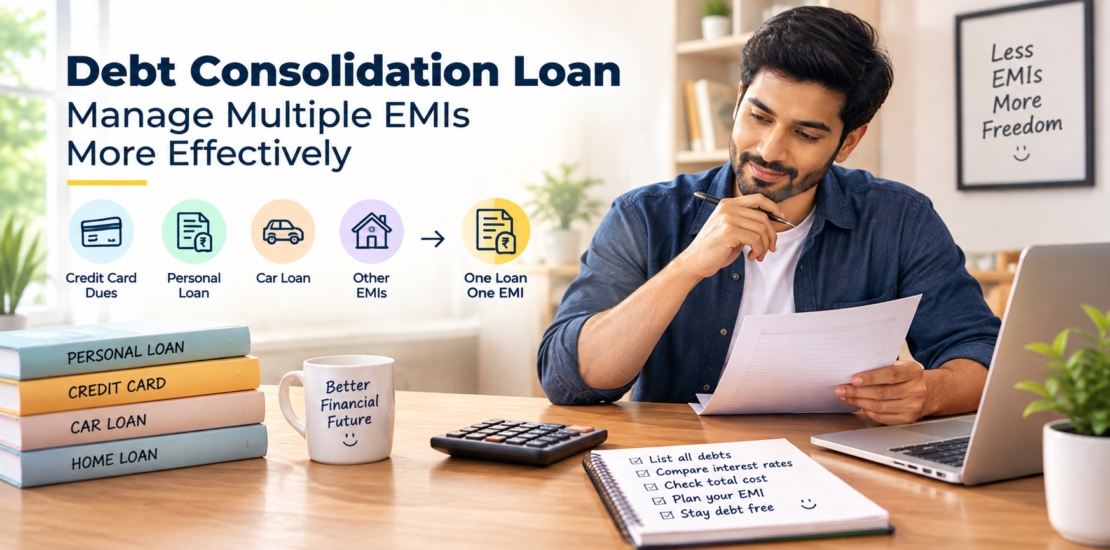
Managing one loan can be relatively simple. But when a person has multiple loans, credit card dues and different EMIs, keeping track of every repayment can become difficult.
Different due dates, interest rates, processing charges and repayment periods can make it harder to understand the actual cost of borrowing.
A Debt Consolidation Loan may be considered by eligible borrowers who want to combine multiple outstanding debts into a single repayment structure. In many cases, a Personal Loan may be used for this purpose, depending on the lender and the borrower’s eligibility.
However, debt consolidation is not simply about replacing several EMIs with one. Borrowers should compare the total cost, repayment period and their ability to manage the new loan before making a decision.
What Is a Debt Consolidation Loan?
A Debt Consolidation Loan is financing used to repay multiple existing debts so that the borrower can manage them through one new loan.
For example, someone may have a Personal Loan, credit card dues and other eligible outstanding loans. Instead of continuing to make several repayments, the borrower may take a suitable consolidation loan and use the funds to clear the existing obligations.
The result can be a single EMI and one repayment schedule.
The exact debts that can be consolidated depend on the lender’s policy and the borrower’s eligibility. Learn More: Home Loan For Women
Why Do Borrowers Consider Debt Consolidation?
One of the main reasons is simpler repayment management.
When several debts are active, borrowers may have to remember multiple due dates and track different interest rates. Consolidating eligible debts can make the repayment structure easier to understand.
Other reasons may include:
• Managing multiple EMI dates through one repayment
• Replacing higher cost debt with financing available at a lower rate, where eligible
• Creating a clearer repayment schedule
• Making monthly cash flow easier to plan
• Reducing the administrative effort of managing several accounts
However, a lower monthly EMI does not necessarily mean the loan is cheaper overall. A longer repayment period can increase the total interest paid.
How Does Debt Consolidation Work?
The process generally starts with calculating the total outstanding amount across eligible loans and credit obligations.
Suppose a borrower has several outstanding balances. The borrower can calculate:
• Total outstanding principal
• Current interest rates
• Remaining tenure
• Existing EMI amounts
• Preclosure or foreclosure charges, if applicable
• Other applicable fees and taxes
The borrower can then compare these costs with the proposed consolidation loan.
If the new financing is approved, the funds may be used to clear eligible existing debts according to the lender’s terms. The borrower then continues repayment through the new loan.
The exact process can vary between lenders.
Can a Personal Loan Be Used for Debt Consolidation?
In some cases, yes.
A Personal Loan may be used for debt consolidation when the lender permits the intended use and the borrower meets the required eligibility criteria.
This can be useful when existing unsecured debts carry higher borrowing costs than the new loan being considered.
However, borrowers should not compare interest rates alone. Processing charges, foreclosure costs on existing loans, tenure and total interest should also be included when calculating the overall cost.
How to Know If Consolidation May Make Sense
Debt consolidation may be worth considering when multiple repayments are becoming difficult to organise or when the borrower has an opportunity to restructure expensive debt at a potentially lower overall cost.
Before applying, calculate the existing monthly EMI burden.
For example, if three loans require separate monthly payments, add those EMIs together and compare the amount with the proposed new EMI.
Then look beyond the monthly payment.
A lower EMI could simply result from extending the repayment period. The borrower may therefore pay more interest over the full tenure.
The objective should be better debt management, not simply obtaining a smaller monthly payment. Read More: Instant Home Loan
What Costs Should You Compare?
Before choosing a Debt Consolidation Loan, check the complete cost.
Important factors include:
• Interest rate
• Processing fee
• GST and other applicable charges
• Foreclosure or prepayment charges on existing loans
• New loan tenure
• Total interest payable
• Late payment charges
• Any additional fees mentioned in the loan agreement
The lender’s Key Facts Statement and loan documentation should also be reviewed carefully so that the borrower understands the applicable charges and repayment terms.
Does Debt Consolidation Affect Your Credit Score?
Applying for new credit can involve a credit enquiry, while closing existing accounts can change the borrower’s credit profile.
The impact depends on the individual’s overall credit history, repayment behaviour, credit utilisation and other factors.
More importantly, consolidation should not become an excuse to accumulate fresh debt.
For example, if credit card balances are cleared through consolidation but the borrower immediately starts using the available credit heavily again, the overall debt problem may return.
Good repayment discipline remains important after consolidation.
When Should You Be Careful?
Debt consolidation is not automatically suitable for every borrower.
Be cautious if the new loan has a similar or higher overall cost than the existing debts.
It may also be unsuitable if the borrower is extending the repayment period significantly just to reduce the monthly EMI.
Another concern is continuing the same spending habits after consolidation.
If the underlying reason for accumulating debt is not addressed, replacing several loans with one loan may only provide temporary relief.
Borrowers should also avoid taking additional loans simply because their monthly EMI appears manageable after consolidation.
What Should You Check Before Applying?
Before applying for a Debt Consolidation Loan, create a complete list of your current debts.
Write down the outstanding balance, EMI, interest rate, remaining tenure and applicable charges for each loan.
Then calculate the total amount required for consolidation.
Compare that figure with the new loan amount, proposed EMI, tenure and total repayment.
Also check your income and essential monthly expenses. The new EMI should fit comfortably within your repayment capacity.
Finally, read the loan agreement and Key Facts Statement carefully before accepting the offer. Read More: Education Loans for Abroad
Final Thoughts
A Debt Consolidation Loan can provide a simpler way to manage multiple eligible debts by replacing several repayment obligations with a single loan.
However, the decision should be based on the total cost of borrowing, repayment capacity and financial discipline, rather than the EMI amount alone.
Before consolidating debt, compare existing loans with the proposed financing, understand all applicable charges and consider whether the new repayment structure genuinely improves your financial position.
Debt consolidation can simplify repayment, but responsible borrowing and consistent repayment remain essential for long term financial management.
Frequently Asked Questions
What is a Debt Consolidation Loan?
It is a loan used to repay multiple eligible debts so that the borrower can manage repayment through a single new loan.
Can I use a Personal Loan for debt consolidation?
Some lenders may allow Personal Loans to be used for debt consolidation, subject to their terms, eligibility requirements and permitted loan usage.
Does debt consolidation reduce my EMI?
It may reduce the monthly EMI in some cases, but this depends on the new interest rate and tenure. A longer tenure can also increase total interest paid.
Can credit card dues be consolidated?
Some lenders may allow eligible credit card outstanding amounts to be included in a consolidation arrangement. The exact rules depend on the lender.
Is debt consolidation always cheaper?
No. A consolidation loan should be evaluated based on total repayment cost, interest, fees, tenure and existing loan closure charges.
Does debt consolidation improve credit score?
There is no automatic improvement. Credit profile changes depend on factors such as repayment history, credit utilisation, enquiries and how existing accounts are managed after consolidation.