
Personal Loan for Career Development: How to Finance Courses, Certifications and Skill Upgrades
- September 14, 2026
- Posted by: BLS
- Category: Personal Loan
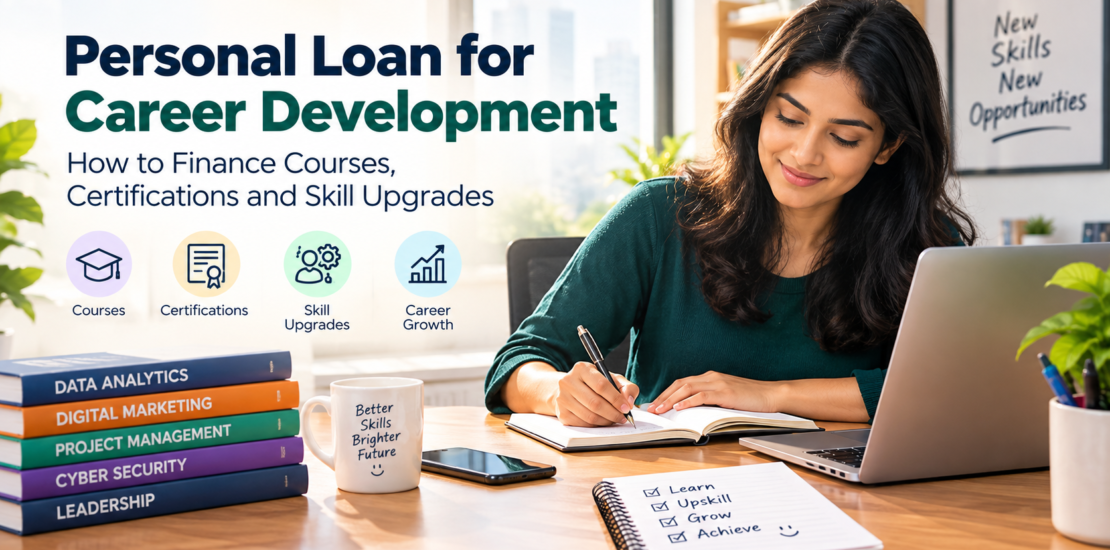
Building a successful career often requires more than a degree. As industries change and new technologies become part of everyday work, professionals may need to learn new skills, complete certifications or take specialised courses to stay competitive.
However, career development can come with significant expenses. Course fees, certification charges, learning equipment, examination costs and other related expenses can add up quickly. For some working professionals, using a Personal Loan for Career Development may be one way to manage these costs without using all their savings at once.
A Personal Loan is generally an unsecured form of borrowing, which means eligible borrowers may not need to provide property or another major asset as security. However, approval, interest rate, loan amount and repayment terms depend on the lender and the borrower’s profile.
What Is a Personal Loan for Career Development?
A Personal Loan for Career Development refers to using personal borrowing to fund expenses related to improving professional knowledge, skills or qualifications.
Depending on the lender and loan terms, the funds may potentially be used for expenses such as:
• Professional certification courses
• Online learning programmes
• Technical training
• Management courses
• Skill development programmes
• Entrance or examination related expenses
• Professional workshops
• Learning equipment such as a laptop, where permitted
• Other eligible career development expenses
The important point is to check the lender’s permitted end use before applying. Not every Personal Loan has identical conditions. Learn More: Loan Against Property for Business
Why Are Career Development Courses Becoming Important?
Technology and workplace requirements continue to evolve. Professionals who completed their formal education several years ago may now need additional skills to remain relevant in their field.
For example, someone working in marketing may want to learn data analytics. An accountant may want to develop advanced financial technology skills. A software professional may consider certifications in cloud computing, cybersecurity or artificial intelligence.
The National Skill Development Corporation also highlights industry relevant courses and future ready skills, while current skilling initiatives include areas such as AI, robotics, data analytics, cybersecurity, electric vehicles and other emerging fields.
This does not mean every course will automatically improve income or career prospects. The value depends on the quality of the course, the industry, the learner’s existing experience and how useful the acquired skill is in the target job market.
What Expenses Can You Consider Financing?
Before taking a Personal Loan, identify exactly where the money will be used.
Course Fees
The primary expense may be the fee charged by an institute, university, training provider or online education platform.
Certification Costs
Some professional certifications require separate registration, examination or renewal fees. These costs should be included when calculating the total requirement.
Learning Equipment
Certain courses may require a suitable laptop, software subscription or other equipment. If borrowing for such expenses is permitted under the loan terms, these costs can be considered while planning the total requirement.
Study Materials
Books, specialised software, training materials and other resources may also add to the total cost.
Examination and Application Expenses
Professional examinations, entrance tests and application fees can sometimes become additional expenses that borrowers overlook.
Creating a complete cost estimate can help you avoid borrowing more than necessary.
How Much Personal Loan Should You Take?
One of the most important decisions is determining the loan amount.
It can be tempting to borrow more than the actual course cost because a Personal Loan may provide access to additional funds. However, borrowing more also means paying interest on a larger amount.
Start by calculating:
• Total course fee
• Certification and examination costs
• Equipment requirements
• Study material expenses
• Other essential career development costs
Then subtract the amount you can comfortably contribute from your existing savings.
The remaining amount can give you a starting point for determining whether borrowing is necessary. Read More: Loan for Professional Practice
Check the Potential Career Benefit Before Borrowing
A career development loan should be evaluated like any other financial commitment.
Ask yourself what you expect to gain from the course.
Will it help you qualify for a new role?
Can it improve your existing professional skills?
Does the certification have recognition in your industry?
Could the course help you become eligible for better opportunities?
Is the training provider credible?
These questions are important because completing a course does not guarantee a salary increase, promotion or new job.
Ideally, the expected professional benefit should justify the total cost of the course and the borrowing involved.
Personal Loan vs Using Your Savings
If you already have enough savings to pay for a course, you may wonder whether borrowing makes sense.
Using savings avoids interest costs and monthly EMI commitments. However, using a large portion of your savings could reduce your emergency financial cushion.
A Personal Loan may allow you to spread the cost through EMIs, but it increases your overall expense because of interest and applicable charges.
The right decision depends on your financial position.
Consider how much emergency savings you have, your existing obligations, your monthly income and how comfortably you can manage another EMI.
What Should You Check Before Applying?
Do not compare Personal Loans only on the advertised interest rate.
Review the complete cost of borrowing, including:
• Interest rate
• Annual Percentage Rate where disclosed
• Processing charges
• Documentation or other applicable fees
• Prepayment or foreclosure conditions
• Late payment charges
• Loan tenure
• Monthly EMI
For digital lending, RBI guidance requires regulated entities to provide borrowers with important cost and lending information, including disclosure of the Annual Percentage Rate in applicable digital lending arrangements.
Always read the loan agreement and sanction documents before accepting the loan. Learn More: Education Loan vs Personal Loan for Higher Studies
Calculate the EMI Before Taking the Loan
Your monthly EMI should fit comfortably within your existing budget.
For example, if your current income already goes toward rent, household expenses, existing loans and investments, adding another EMI may put pressure on your monthly cash flow.
Do not assume that a future salary increase will automatically make the EMI affordable.
Instead, base the decision on your current financial position and maintain some room for unexpected expenses.
Consider Alternatives Before Borrowing
A Personal Loan is not the only possible way to finance career development.
Depending on the course and your eligibility, you could explore:
• Employer sponsored training
• Scholarships
• Course provider payment plans
• Skill development programmes
• Education financing where applicable
• Savings
• Interest free instalment options offered by the course provider
Some skill development ecosystems also provide access to financing through participating financial institutions for eligible learners and programmes.
Comparing these options before borrowing can help you choose a more suitable and affordable route.
When Can a Personal Loan for Career Development Make Sense?
A Personal Loan may be worth considering when the course has a clear connection to your career plans and you have a stable repayment capacity.
For example, a working professional may choose a certification that is directly relevant to their current industry or a planned career transition.
The decision becomes less attractive when the course is expensive, its career value is unclear or the EMI would significantly affect your monthly finances.
The objective should not simply be to complete another course. The objective should be to make a thoughtful investment in your professional development.
Plan Your Career Investment Carefully
Before applying for a Personal Loan for Career Development, research the course, compare providers and understand the total cost.
Check whether the certification is recognised in your industry. Look at the course curriculum, faculty, practical training, learner reviews and career support where applicable.
Also calculate the total loan repayment rather than focusing only on the EMI.
A lower EMI may result from a longer repayment period, which can increase the total interest paid.
Final Thoughts
Learning new skills can be an important part of long term career planning. Whether you want to improve your current position, prepare for a career change or develop expertise in an emerging field, professional education can require a meaningful financial investment.
A Personal Loan for Career Development may help eligible borrowers manage these expenses through structured repayments. However, borrowing should be based on the actual cost of the course, expected career value and your ability to repay comfortably.
Before applying, compare available financing options, understand all applicable charges and choose a loan amount that matches your genuine requirement.
Career growth is valuable, but it is equally important to make sure that the financing used to achieve it remains financially manageable. Contact us for more details.
Frequently Asked Questions
1. Can I use a Personal Loan for career development?
Depending on the lender and loan terms, a Personal Loan may be used for eligible career development expenses such as courses, certifications and professional training. Always confirm the permitted end use before applying.
2. Can I take a Personal Loan for an online course?
Some borrowers may use Personal Loan funds for eligible online education or professional courses. However, the lender’s terms should be checked before taking the loan.
3. Should I take a Personal Loan for a certification?
It depends on the cost of the certification, its relevance to your career and your ability to repay the loan. Consider the potential professional benefit before borrowing.
4. How much should I borrow for a career development course?
Ideally, borrow only the amount required after considering your own contribution and other available funding options.
5. What should I check before taking a Personal Loan?
Compare the interest rate, total borrowing cost, processing charges, tenure, EMI, repayment conditions and other applicable charges before accepting the loan.
6. Can a career development course guarantee a higher salary?
No. A course or certification cannot guarantee a promotion, salary increase or new job. Its value depends on factors such as industry demand, course quality, experience and employer requirements.