
Franchise Loan vs Business Loan: Which Financing Option Is Right for You?
- September 2, 2026
- Posted by: BLS
- Category: Business Loan
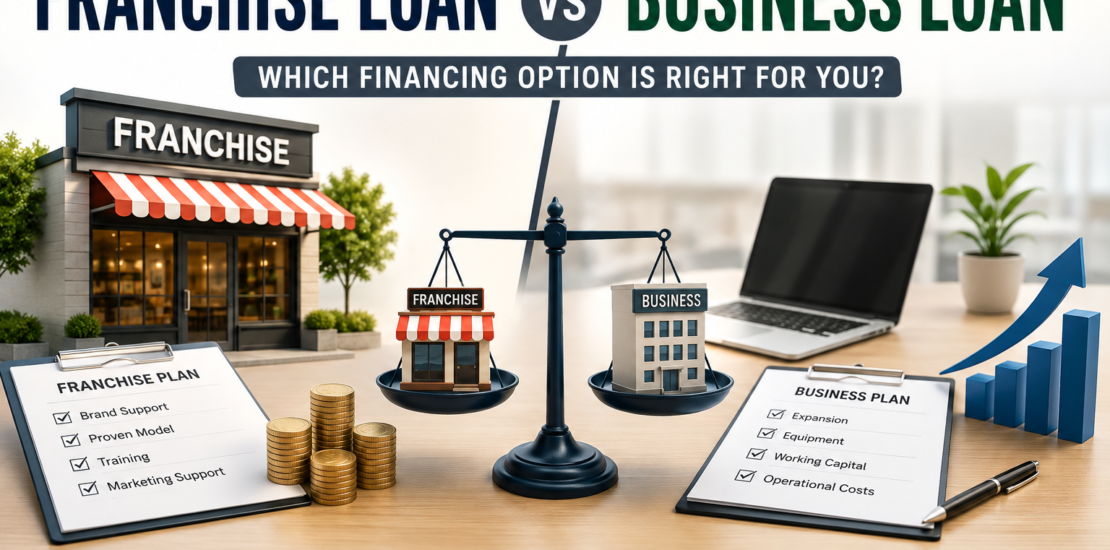
Starting a business requires careful planning, and financing is often one of the most important parts of that plan. For someone planning to open a franchise, the funding requirement can be different from that of someone starting an independent business. A franchise may involve expenses such as franchise fees, interiors, equipment, inventory, staff, technology, marketing, and working capital. An independent business may have a different combination of startup and operating costs.
This raises an important question: should you look for a Franchise Loan vs Business Loan?
Both options can provide financial support to eligible borrowers, but the right choice depends on your business model, funding requirement, repayment capacity, and the applicable terms.
What Is a Franchise Loan?
A Franchise Loan is financing that may help eligible borrowers meet expenses associated with establishing or operating a franchise business.
Depending on the financing product and lender terms, the funds may potentially be used for expenses such as franchise related costs, equipment, interiors, inventory, working capital, or other permitted business requirements.
The exact loan amount, interest rate, repayment period, eligibility criteria, and permitted use of funds can vary between lenders.
Before applying, a prospective franchise owner should understand exactly which expenses need financing and whether the selected financing option permits those expenses. Learn More: Loan for Professional Practice
What Is a Business Loan?
A Business Loan is a broader form of financing that may be available to eligible businesses for various business related requirements.
Depending on the lender and loan product, a Business Loan may be considered for working capital, expansion, equipment purchases, inventory, renovation, technology, or other permitted business expenses.
Because Business Loans can serve many different purposes, they may be suitable for both established businesses and certain new business ventures, depending on the lender’s eligibility requirements.
Franchise Loan vs Business Loan: The Main Difference
The biggest difference is generally the purpose and structure of the financing.
A Franchise Loan is focused on financing requirements associated with a franchise business.
A Business Loan is broader and may be used for several different business requirements.
For example, someone planning to open a branded food outlet may need funds for franchise fees, interiors, kitchen equipment, inventory, and working capital.
Another entrepreneur may be opening an independent retail store and require financing for inventory, equipment, renovation, and operating expenses.
Both may require business financing, but their specific funding requirements can be different. Read More: Loan Against Fixed Deposit
When Can a Franchise Loan Make Sense?
A Franchise Loan may be worth exploring when your primary objective is to establish or operate a franchise.
Franchises can have specific startup requirements. These may include franchise fees, brand related expenses, location setup, equipment, inventory, staff recruitment, and other costs.
If the financing option matches these requirements and the borrower meets the eligibility criteria, it may provide a structured way to manage the initial investment.
However, borrowers should understand the complete financing terms before making a decision.
When Can a Business Loan Make Sense?
A Business Loan may be more appropriate when the funding requirement is broader and not limited to franchise related expenses.
For example, an existing business may require financing for expansion, additional inventory, new equipment, renovation, or working capital.
An entrepreneur may also consider a Business Loan when establishing an independent business, subject to the lender’s eligibility requirements.
The important factor is to match the financing option with the actual purpose of borrowing.
Compare Your Total Investment
Before choosing either option, calculate your complete business investment.
For a franchise, consider expenses such as
- Franchise fees
- Location related expenses
- Interiors
- Equipment
- Initial inventory
- Staff recruitment
- Technology
- Marketing
- Working capital
- Licenses and other applicable expenses
For an independent business, the list may include similar expenses, but the actual amounts and requirements can be different.
A detailed budget can help you understand how much funding you genuinely require.
Consider Your Working Capital Requirement
Startup expenses are not the only financial consideration.
Once the business begins operating, you may need funds for salaries, rent, utilities, inventory, supplier payments, transportation, marketing, maintenance, and other regular expenses.
A franchise may have established operating standards that influence some of these costs.
An independent business may have greater flexibility but may also need to build its own systems and customer base.
Before borrowing, estimate how much working capital you may need during the initial operating period.
Think About Revenue Expectations
One advantage of choosing a franchise can be access to an established brand and business model. However, this does not guarantee a specific level of sales or profitability.
Your location, customer demand, competition, pricing, operating costs, and management can all affect the performance of the business.
Before taking financing, prepare realistic revenue projections.
Do not calculate repayment capacity based only on an optimistic sales estimate.
Consider what would happen if the business takes longer than expected to reach its expected revenue level. Read More: Education Loan vs Personal Loan for Higher Studies
Compare Interest Rates and Other Charges
The interest rate is an important factor, but it should not be the only factor you compare.
Look at the complete financing terms, including
- Interest rate
- Loan amount
- Repayment period
- Processing charges
- Eligibility requirements
- Documentation
- Prepayment conditions
- Other applicable charges
A financing option with a lower monthly repayment is not necessarily cheaper overall.
A longer repayment period may reduce the monthly EMI while increasing the total interest paid.
Understanding the complete cost can help you make a more informed decision.
Check Your Repayment Capacity
Before taking financing, review your personal and business finances.
Consider your existing loans, household expenses, business expenses, expected revenue, and available savings.
If you are starting a new franchise, remember that revenue may take time to become consistent.
Your repayment plan should account for possible fluctuations in business income.
Borrowing an amount that fits comfortably within your expected cash flow can help reduce financial pressure.
Franchise Loan or Business Loan: Which Is Better?
There is no single answer that works for everyone.
A Franchise Loan may be worth considering if you are specifically planning a franchise and the financing terms match your startup and operating requirements.
A Business Loan may be more suitable when your requirement is broader, such as expansion, equipment, inventory, renovation, or working capital.
The better option is the one that matches your actual requirement, eligibility, repayment capacity, and financial goals.
Instead of choosing a loan simply because it has a particular name, compare the complete terms and understand how the financing will be used. Read More: Commercial Vehicle Loan
What Should You Ask Before Applying?
Before selecting financing, ask yourself a few important questions.
How much money do I actually need?
What expenses will the funds cover?
How much money will I need for working capital?
What is my expected monthly cash flow?
Do I already have other loan repayments?
Can I manage the repayment if business income is temporarily lower?
What is the total cost of the financing?
Answering these questions can help you approach borrowing more responsibly.
How Better Loan Solutions Can Help
At Better Loan Solutions, we understand that every business can have different financing requirements.
Whether you are considering a franchise, expanding an existing business, purchasing equipment, or managing working capital, understanding your funding requirement and repayment capacity is important before applying.
Better Loan Solutions can help eligible borrowers explore suitable financing options based on their financial circumstances and requirements.
Borrowers should review all applicable terms, costs, eligibility requirements, and repayment responsibilities before making a final decision. Read More: Planning to Buy a Plot? Here’s What You Should Know Before Applying for Finance
Conclusion
Choosing between a Franchise Loan and a Business Loan depends largely on what you are planning to finance.
A franchise owner may need funds for franchise fees, interiors, equipment, inventory, marketing, and working capital. An independent business may have a different combination of startup or expansion expenses.
A Franchise Loan may be worth exploring when the financing is specifically suited to franchise related requirements. A Business Loan may provide broader financing flexibility for eligible businesses with different operational or expansion needs.
Before applying, calculate your total investment, estimate your working capital requirement, review your expected cash flow, compare financing costs, and assess your repayment capacity.
The right financing decision should support your business plans without placing unnecessary pressure on your finances.
Whether you choose a franchise or build an independent business, careful financial planning can give you a stronger foundation for managing the costs of starting and growing your business.
Frequently Asked Questions
Is a Franchise Loan different from a Business Loan?
A Franchise Loan generally focuses on financing requirements associated with a franchise business, while a Business Loan can cover a broader range of business requirements depending on the lender and financing product.
Can a new franchise owner apply for a Business Loan?
Eligibility depends on the lender and financing product. Some lenders may consider applications from new business owners, while others may have specific requirements related to income, business experience, or financial history.
What expenses can Franchise Loan financing cover?
Depending on the applicable terms, financing may potentially support expenses such as franchise fees, equipment, interiors, inventory, and working capital.
Which is better, a Franchise Loan or Business Loan?
Neither option is automatically better. The appropriate choice depends on your business model, funding requirement, eligibility, repayment capacity, and the complete financing terms.
How much should I borrow for a franchise?
You should estimate your complete startup and working capital requirements and borrow only an amount that you can reasonably repay.
What should I compare before choosing financing?
Compare the interest rate, loan amount, repayment period, processing charges, eligibility requirements, documentation, prepayment conditions, and total repayment cost.