
Loan Balance Transfer in India: When Is It Worth Switching Lenders?
- October 26, 2026
- Posted by: BLS
- Category: Loan Balance Transfer
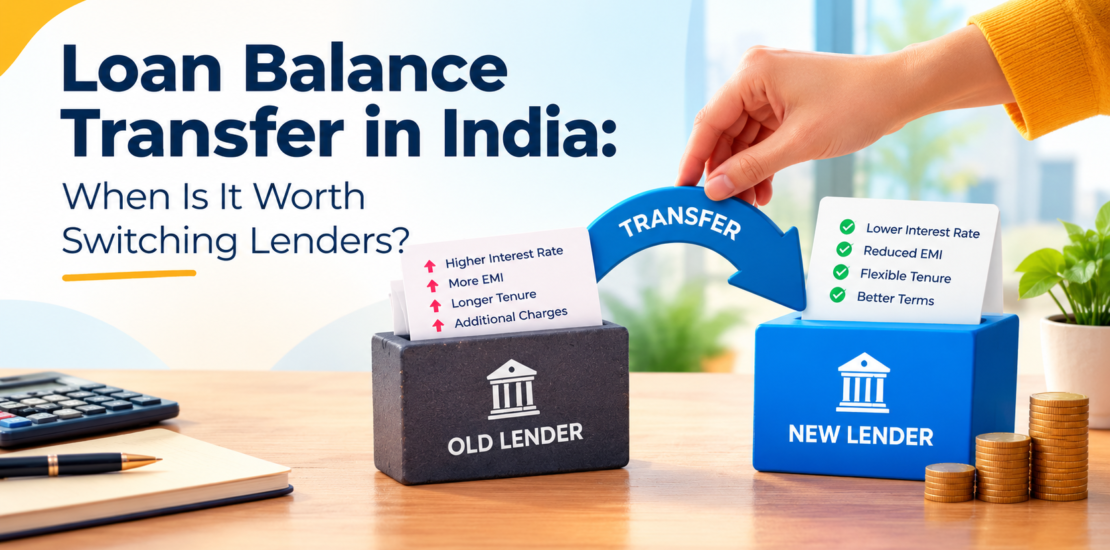
Taking a loan is a major financial commitment, but choosing a lender does not always have to be a permanent decision. As your financial situation changes and other lenders introduce different loan offers, you may find an opportunity to move your existing loan to another lender on more suitable terms.
This process is known as a loan balance transfer. It allows borrowers to transfer their outstanding loan amount to a new lender, subject to approval and the new lender’s terms.
However, a lower interest rate does not automatically mean greater savings. Before switching lenders, it is important to understand the potential benefits, associated costs, eligibility requirements, and long term impact on your finances.
In this guide, Better Loan Solutions explains how a loan balance transfer works and how to decide whether it makes financial sense for you.
What Is a Loan Balance Transfer?
A loan balance transfer is a process in which a new lender takes over the outstanding balance of your existing loan. Instead of continuing repayments to your current lender, you repay the new lender according to the revised loan agreement.
Borrowers may explore balance transfers for different types of loans, including home loans, business loans, and certain other eligible loan products.
For example, suppose you have an existing loan with a relatively high interest rate. Another lender offers a lower rate and suitable repayment terms. You may consider transferring your outstanding balance if the overall savings are greater than the costs involved.
The new lender will assess your application, income, repayment history, outstanding loan amount, and other eligibility conditions before approving the transfer.
When Should You Consider a Loan Balance Transfer?
A balance transfer can be useful in several situations. However, the right decision depends on your loan details and financial priorities.
1. When You Can Get a Lower Interest Rate
Interest rates directly affect the total cost of borrowing. If another lender offers a lower rate than your existing lender, you may be able to reduce the interest payable over the remaining loan period.
Before making a decision, compare the interest rates offered by both lenders and calculate the estimated interest remaining on your existing loan.
Also check whether the new rate is fixed or floating and understand how it may change over time.
2. When Your Current EMI Is Difficult to Manage
Your financial circumstances may change after taking a loan. Household expenses may increase, business income may fluctuate, or other financial responsibilities may arise.
A balance transfer may provide an opportunity to review your repayment structure. Depending on the new lender’s offer, you may be able to choose a different repayment period or EMI.
However, extending the repayment period can increase the total interest paid, even if the monthly instalment becomes smaller. The goal should be to find a repayment plan that fits your budget without unnecessarily increasing the overall borrowing cost.
3. When You Have a Long Repayment Period Remaining
The timing of a balance transfer matters. If you have only a short period left on your loan, the potential interest savings may be limited.
On the other hand, when a substantial repayment period remains, even a modest difference in interest rates may create meaningful savings.
This is why borrowers should compare the remaining cost of their current loan with the complete cost of the proposed new loan instead of focusing only on the monthly EMI.
4. When You Want Better Loan Terms
Interest rates are not the only factor that matters. You may also want clearer repayment terms, better service, more convenient account management, or greater flexibility for eligible part payments.
If your existing lender does not meet your requirements, exploring other options may help you make a more informed decision.
Always review the new loan agreement carefully to understand its conditions and applicable charges before accepting an offer.
How to Calculate Whether a Balance Transfer Will Save Money
Before transferring a loan, compare the total remaining cost of your existing loan with the total cost of the new loan.
Consider the following example.
Suppose your existing loan has an estimated remaining interest cost of ₹2,40,000. A new lender offers terms that could reduce the remaining interest to ₹1,85,000.
The estimated interest saving would be ₹55,000.
Now suppose the transfer involves processing fees, documentation expenses, and other applicable costs totalling ₹15,000.
Your estimated net saving would be ₹40,000.
These figures are only an illustration. Actual savings depend on your outstanding balance, interest rate, remaining tenure, repayment schedule, and lender charges.
To calculate your own potential savings, compare:
- The remaining principal and interest under your current loan.
- The repayment amount and interest under the new loan.
- Any processing, documentation, valuation, or other applicable charges.
- Any prepayment or foreclosure charges that apply to your existing loan.
- The effect of changing the repayment tenure.
Do not compare EMIs alone. A lower EMI may result from a longer repayment period rather than a lower total borrowing cost.
What Costs Should You Check Before Transferring a Loan?
A loan balance transfer may involve several expenses. Their applicability and amount depend on the loan type, lender, and terms of the agreement.
Processing Fees
The new lender may charge a processing fee to assess and process your application. Ask for the amount in writing and check whether taxes or other charges apply.
Prepayment or Foreclosure Charges
Your existing lender may have applicable charges for closing the loan before its scheduled end. The rules depend on the type of loan, interest rate, borrower category, lender, and applicable regulations.
Do not assume that every loan carries a foreclosure fee or that every loan is automatically exempt. Request a written foreclosure statement and verify the rules applicable to your specific loan.
Documentation and Other Expenses
Some transfers may involve legal checks, property valuation, document handling, or other administrative expenses, particularly when the loan is secured against property.
Ask both lenders for a clear list of applicable costs before proceeding.
The Reserve Bank of India publishes directions and borrower information concerning loan charges and lending practices. You can review the relevant information on the official RBI website.
Documents You May Need for a Loan Balance Transfer
The documents required depend on the loan product and the new lender’s policies. Commonly requested documents may include:
- Identity and address proof
- PAN card and other applicable KYC documents
- Income proof, such as salary slips, bank statements, or business financial records
- Existing loan sanction letter
- Current loan account statement
- Repayment history
- Outstanding balance or foreclosure statement
- Property documents, where relevant to a secured loan
The lender may request additional documents depending on your profile and the nature of the loan.
Keeping your documents organised can help the application process move more smoothly.
Does Your Credit Score Matter?
Yes, your credit profile may influence the new lender’s assessment.
A consistent repayment history and manageable existing debt can support your application. Missed EMIs, high outstanding debt, or recent repayment difficulties may affect the lender’s decision or the terms offered.
Before applying, review your credit report for errors and make sure your existing loan payments are up to date wherever possible.
Remember that a balance transfer is a fresh credit assessment. Approval is not guaranteed simply because another lender has offered an attractive interest rate.
Common Mistakes to Avoid
Borrowers should avoid a few common mistakes when considering a balance transfer.
Focusing only on the interest rate: A lower advertised rate may not provide savings after accounting for fees and the remaining tenure.
Ignoring the repayment period: A longer tenure may reduce the EMI but increase the total interest payable.
Applying without comparing offers: Review multiple suitable options, including the complete repayment cost and the terms attached to each offer.
Overlooking the loan agreement: Read the applicable charges, repayment conditions, and other important terms before signing.
Closing the existing loan too early: Follow the new lender’s instructions and ensure that the transfer and settlement are completed correctly. Obtain confirmation that the old loan has been closed and check that any related security or account formalities have been completed.
Is a Loan Balance Transfer Right for You?
A loan balance transfer may be worth considering when it provides genuine savings, improves your repayment terms, or better suits your current financial situation.
However, it may not be beneficial if your existing loan is close to completion, the transfer costs are high, or the new loan increases your total repayment burden.
Start by reviewing your outstanding balance, current interest rate, remaining tenure, and monthly EMI. Then compare these details with written offers from other lenders. Consider both immediate affordability and the total amount you will pay over the remaining loan period.
Explore Suitable Loan Options with Better Loan Solutions
Choosing the right loan involves more than comparing interest rates. It requires understanding your financial requirements, repayment capacity, and the complete terms of the loan.
At Better Loan Solutions, we help borrowers explore suitable loan options based on their profiles and requirements. Whether you are reviewing an existing loan or considering a new borrowing option, comparing the available terms can help you make a more informed financial decision.
Contact Better Loan Solutions to discuss your requirements and explore available loan options.
Make your next loan decision with a clear understanding of the costs, benefits, and repayment commitment.
Disclaimer: Loan eligibility, interest rates, charges, and approval depend on the lender’s policies, the applicant’s profile, and applicable regulations. Review the complete loan terms before making a decision.