
How Your Bank Statement Affects Loan Approval
- May 11, 2026
- Posted by: BLS
- Categories: Loan, Personal Loan
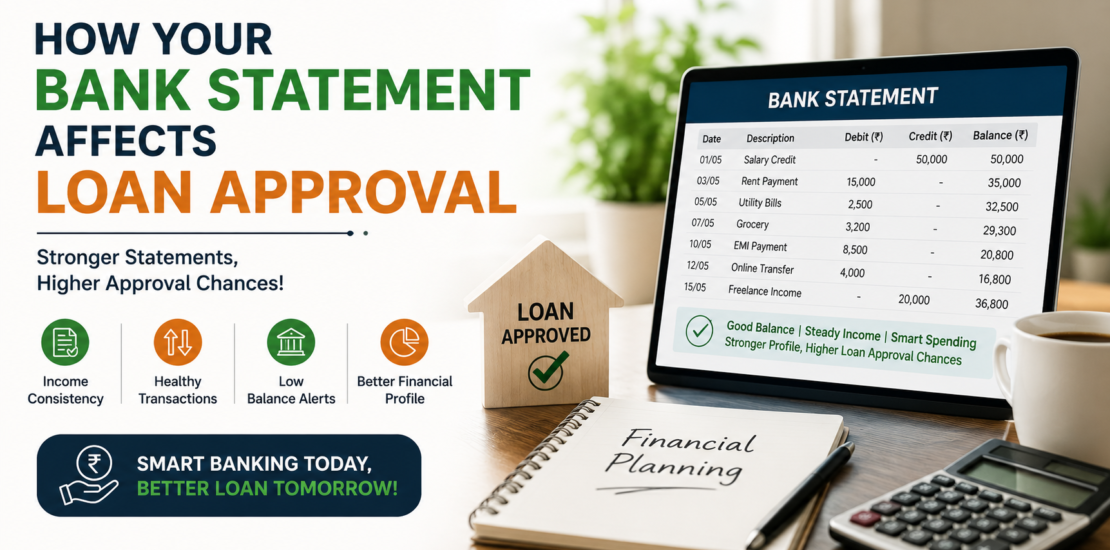
When applying for a personal loan, most people focus only on their credit score and income. However, one of the most important documents lenders carefully examine is your bank statement.
Your bank statement gives lenders a detailed picture of your financial behavior, spending habits, repayment discipline, and overall money management. Even if your salary is good, poor banking habits can negatively impact your chances of loan approval.
Understanding how lenders evaluate your bank statement can help you prepare better and improve your approval chances.
In this guide, we will explain what lenders check in your bank statement, red flags that can lead to rejection, and simple ways to strengthen your financial profile.
Why Bank Statements Are Important for Loan Approval
Bank statements help lenders verify your financial stability.
Unlike salary slips or income proof, bank statements show your real financial behavior. They provide insights into your monthly income, expenses, savings, loan repayments, and cash flow management.
This helps lenders understand whether you can comfortably repay the loan.
What Lenders Check in Your Bank Statement
1. Regular Income Credits
Lenders first check whether your income is consistent.
For salaried individuals, they look for monthly salary credits. For self employed applicants, they evaluate business transactions and regular inflow of funds.
Stable income increases trust and improves approval chances.
2. Average Monthly Balance
Maintaining a healthy balance in your account reflects good financial discipline.
If your account balance frequently drops close to zero, lenders may consider it a sign of financial stress.
3. EMI and Existing Loan Payments
Lenders carefully review your ongoing loan obligations.
Regular EMI payments indicate responsible borrowing behavior. However, too many active EMIs can reduce your repayment capacity.
4. Bounced Cheques or Failed Transactions
Cheque bounces and failed auto debit payments create a negative impression.
Frequent failed transactions may signal poor money management and increase lender concerns.
5. Cash Deposits and Withdrawals
Large or frequent cash transactions can sometimes raise questions.
Lenders prefer stable and transparent financial activity through banking channels.
6. Spending Patterns
Your spending habits also matter.
Heavy gambling transactions, excessive online betting, or unusually high discretionary spending can negatively affect your profile.
Responsible spending reflects financial maturity.
Common Bank Statement Mistakes That Hurt Loan Approval
Maintaining Low Balance
Constantly keeping your account balance very low can make lenders feel that you are financially unstable.
Frequent Overdraft Usage
Repeated overdraft usage may suggest dependency on borrowed funds.
Multiple Loan Repayments
Too many ongoing loan deductions can lower your eligibility.
Irregular Income Flow
Unstable income patterns can reduce lender confidence.
Excessive Cash Transactions
Heavy cash movement without proper explanation can create verification concerns.
How Many Months of Bank Statement Are Required
Most lenders ask for the last 3 to 6 months of bank statements.
This allows them to evaluate your recent financial behavior and repayment capacity.
Some lenders may ask for longer records depending on the loan amount and applicant profile.
Tips to Improve Your Bank Statement Before Applying
1. Maintain Sufficient Balance
Try to keep a healthy balance in your account consistently.
2. Avoid Unnecessary Spending
Reduce non essential expenses before applying for a loan.
3. Clear Small Outstanding Dues
Pay pending credit card bills or overdue EMIs to improve your profile.
4. Avoid Frequent Cash Withdrawals
Maintain stable and transparent digital transactions.
5. Keep Salary Credits Consistent
Avoid unnecessary changes in salary account or irregular deposits.
Can You Get a Loan with a Weak Bank Statement
Yes, it is possible in some cases.
Certain digital lenders and NBFCs may still offer loans based on alternative factors such as credit score, employment stability, or additional income proof.
However, approval terms may differ and interest rates could be slightly higher.
Why Online Lenders Are More Flexible
Traditional banks often follow strict documentation rules.
Online lenders use digital verification methods and alternative risk assessment systems. This allows faster approvals for applicants with non traditional financial profiles.
How Bank Statements Affect Self Employed Applicants
For self employed individuals, bank statements become even more important.
Lenders use them to evaluate business income consistency, customer payments, operational cash flow, and overall financial stability.
Maintaining organized banking records can significantly improve approval chances.
Conclusion
Your bank statement is more than just a transaction history.
It is a reflection of your financial discipline and repayment ability.
Even with a decent salary or credit score, poor banking habits can affect loan approval. On the other hand, maintaining stable balances, responsible spending, and regular income flow can strengthen your profile.
Before applying for any loan, review your bank statement carefully and make improvements wherever necessary.
Small financial habits today can make a big difference in your approval chances tomorrow.
Frequently Asked Questions
Why do lenders ask for bank statements
Lenders use bank statements to verify income, spending habits, repayment history, and financial stability.
How many months of bank statements are required for a loan
Most lenders require the last 3 to 6 months of bank statements.
Can low balance affect loan approval
Yes, consistently low balance may indicate financial instability and reduce approval chances.
Do bounced cheques affect loan approval
Yes, frequent cheque bounces or failed transactions can create a negative impression.
Can I get a loan without a bank statement
Some lenders may offer loans using alternative documents, but eligibility depends on your overall profile.